

Made to order
All models are custom designed and made to order - request a quote to get started:
3. Made to order
The custom designed model is made according to specifications and goes through a thorough manufacturing process as outlined below. Order the Detail sample to explore the finishing quality, hardwood and stainless steel, structural composition and assembly techniques used across all models.

4. Delivery & installation
Once finished all components are quality checked and made ready for packing and shipping with DHL (door to door). Once delivered we will help with assembly and installation.
Our manufacturing process
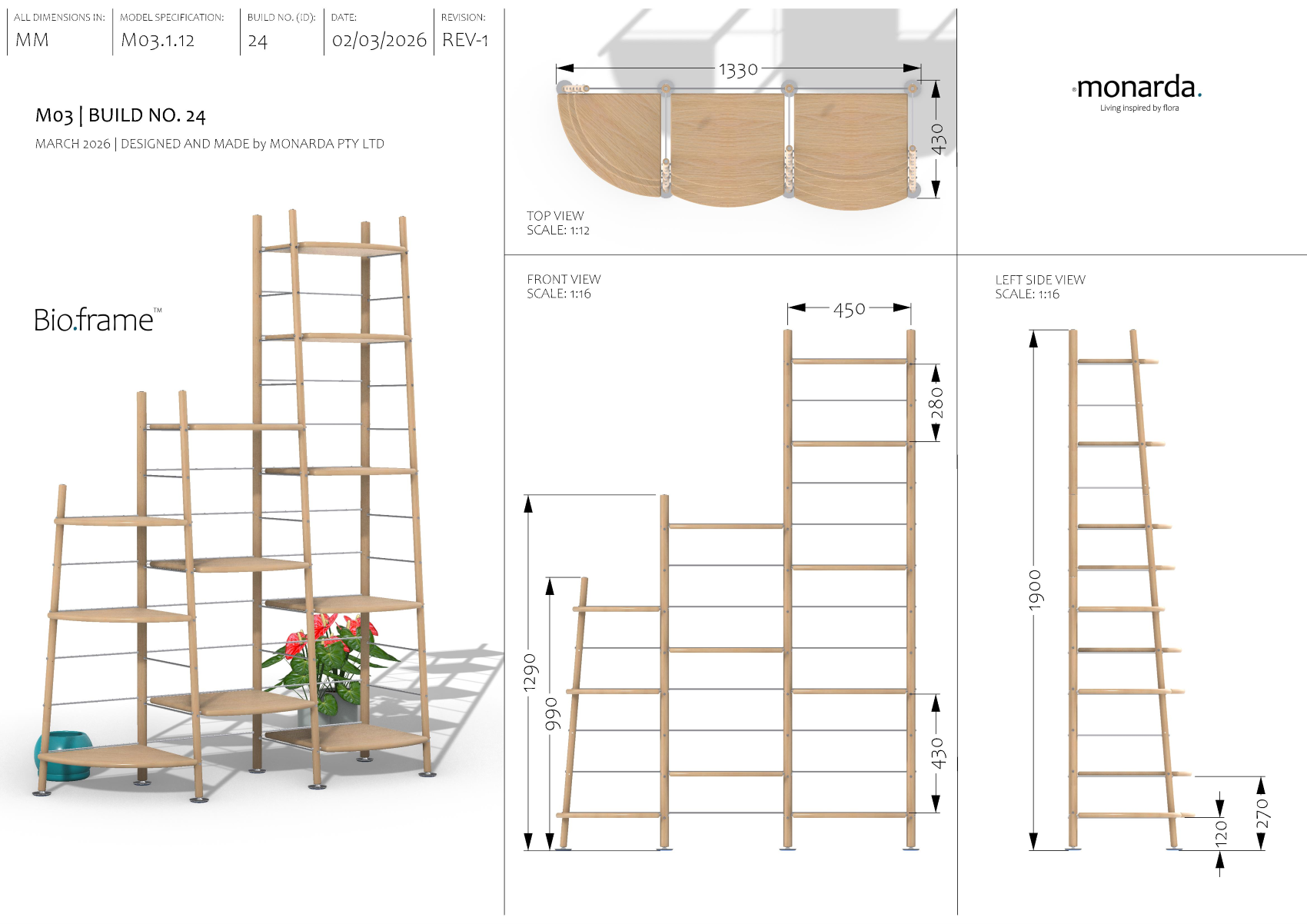
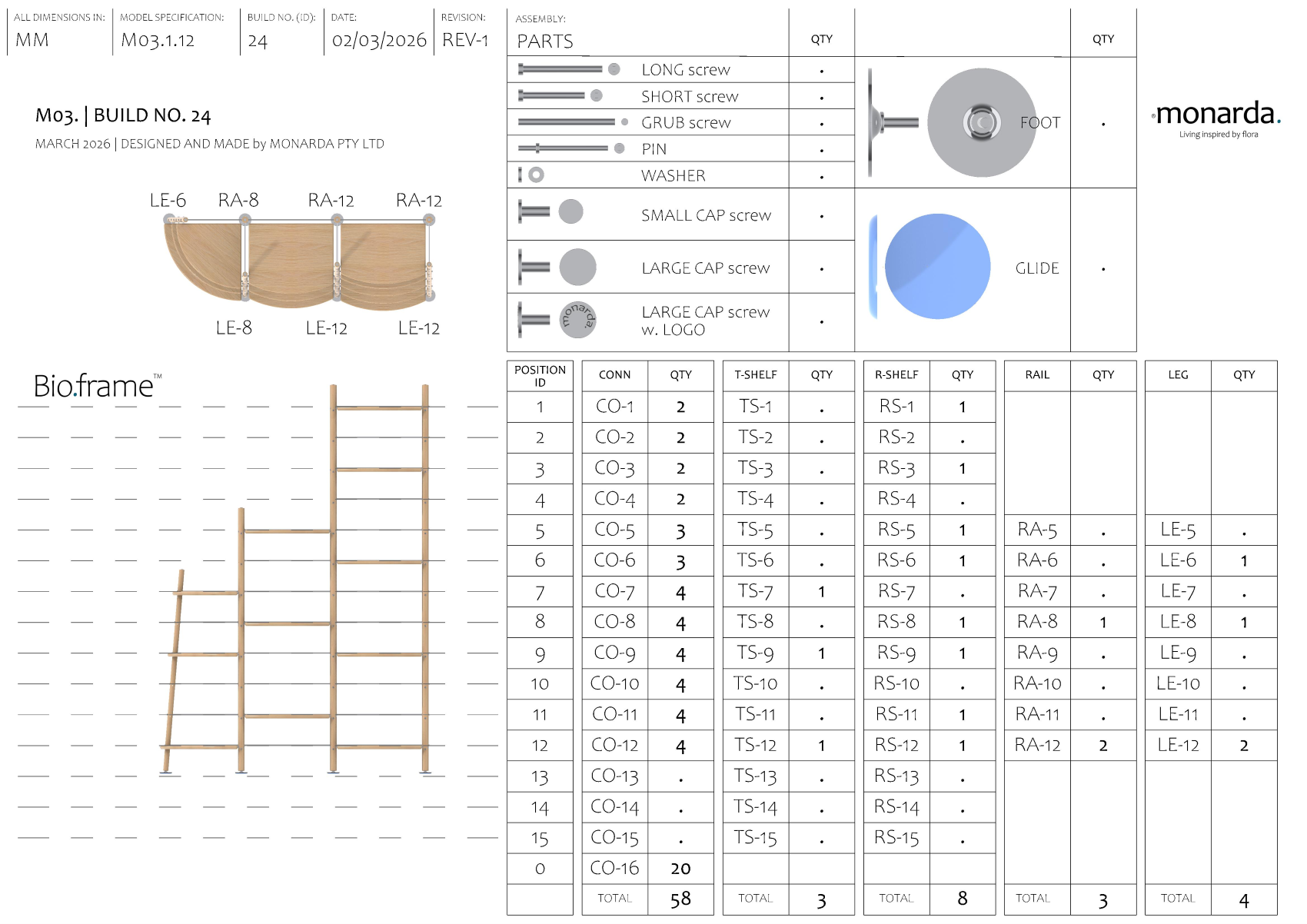
The approved quote includes a Configuration and Parts List that specifies the work. It is used to quality check all final components and secure correct packing and shipping.
Note: Bio.frame is currently available within Greater Sydney, Australia. Each model is made to order and delivered directly from our designer-maker workshop.
Oak selection
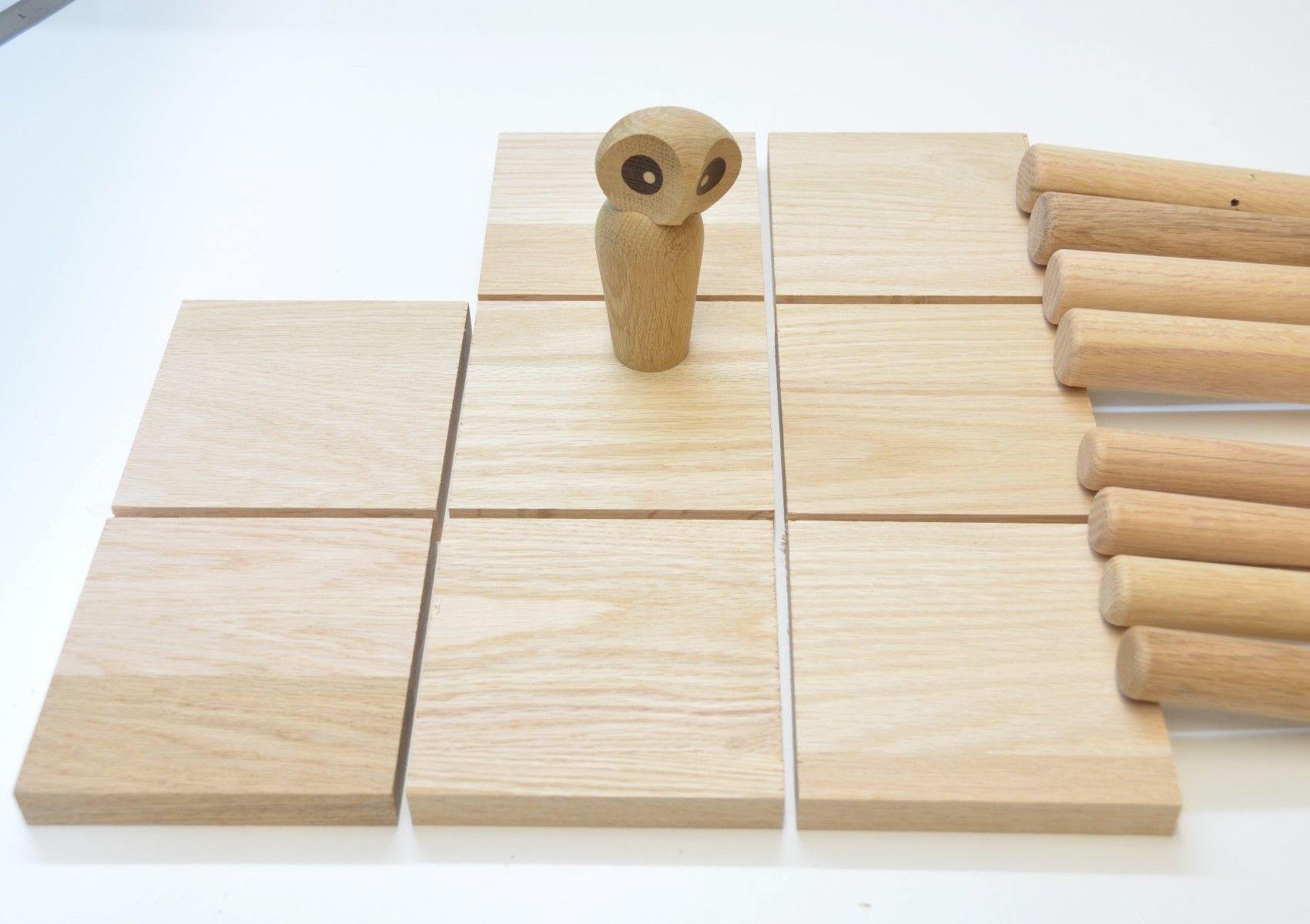
American Oak is chosen for its strength, fine grain structure and clean machining qualities. The hardwood is sourced overseas and locally processed in Australia into premium panels and precision-turned dowels. Its consistent density supports accurate cutting, shaping and drilling, allowing the joinery to meet tight tolerances and resulting in a refined, durable surface finish.
High precision drilling and cutting
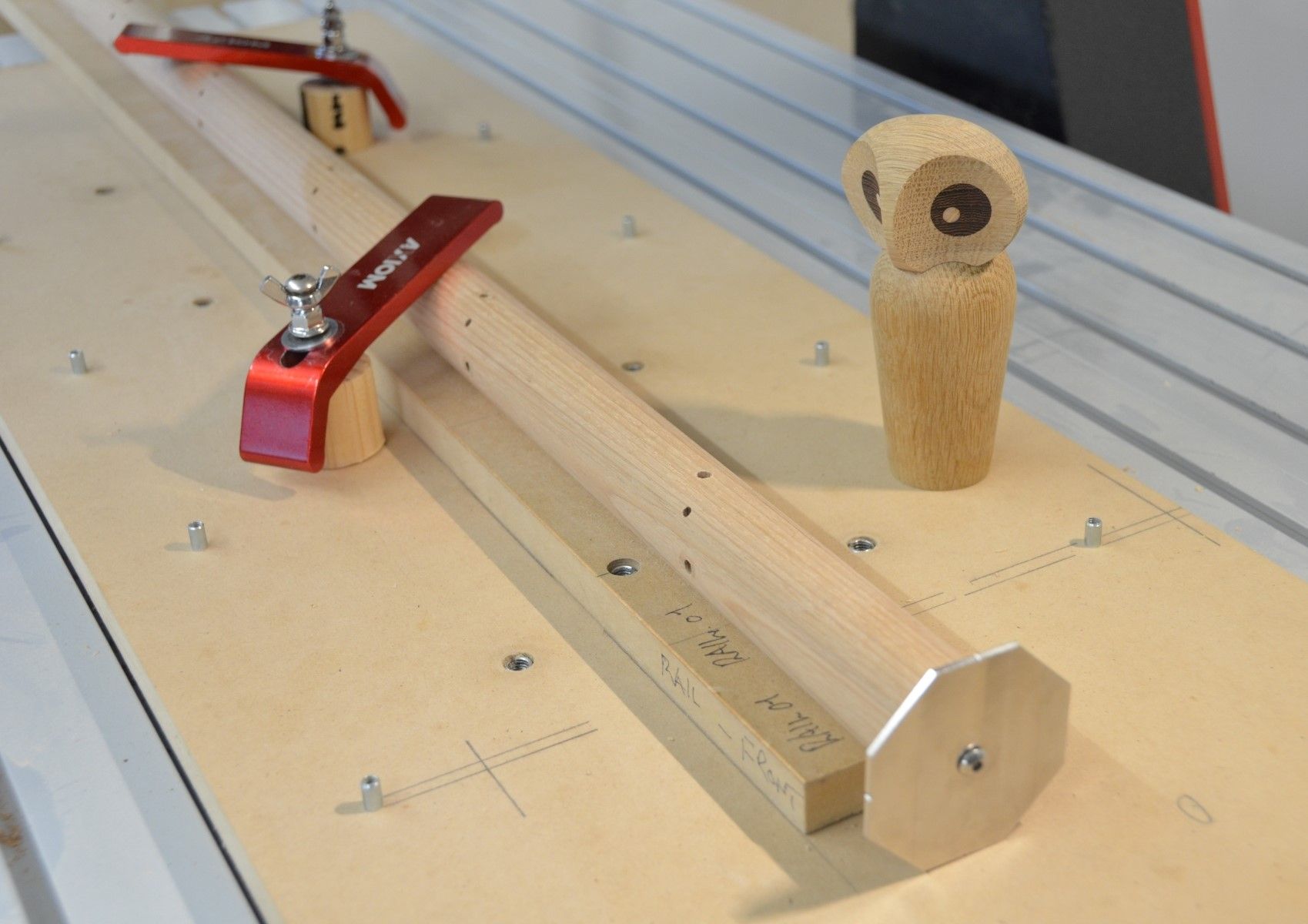
Computer-controlled cutting and drilling ensure consistent accuracy across all hardwood components. Each panel and dowel is machined to precise tolerances, allowing the joinery to fit cleanly and the final model to assemble with ease.
Rounded shapes
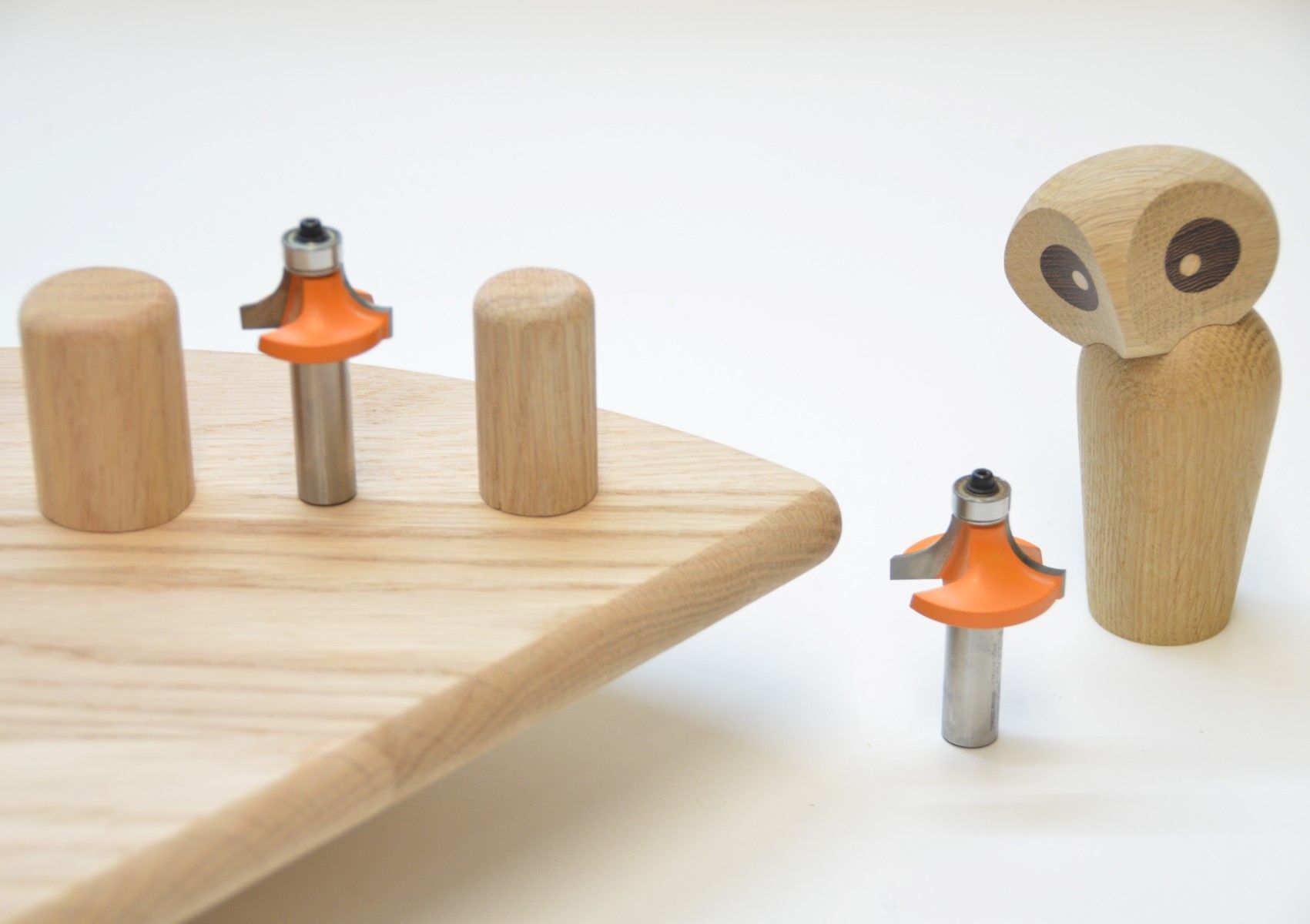
Shelf sides and frame ends are shaped on high-speed routers. This process applies precise rounding profiles that create smooth, tactile edges and give the hardwood a refined, finished appearance.
High precision joinery
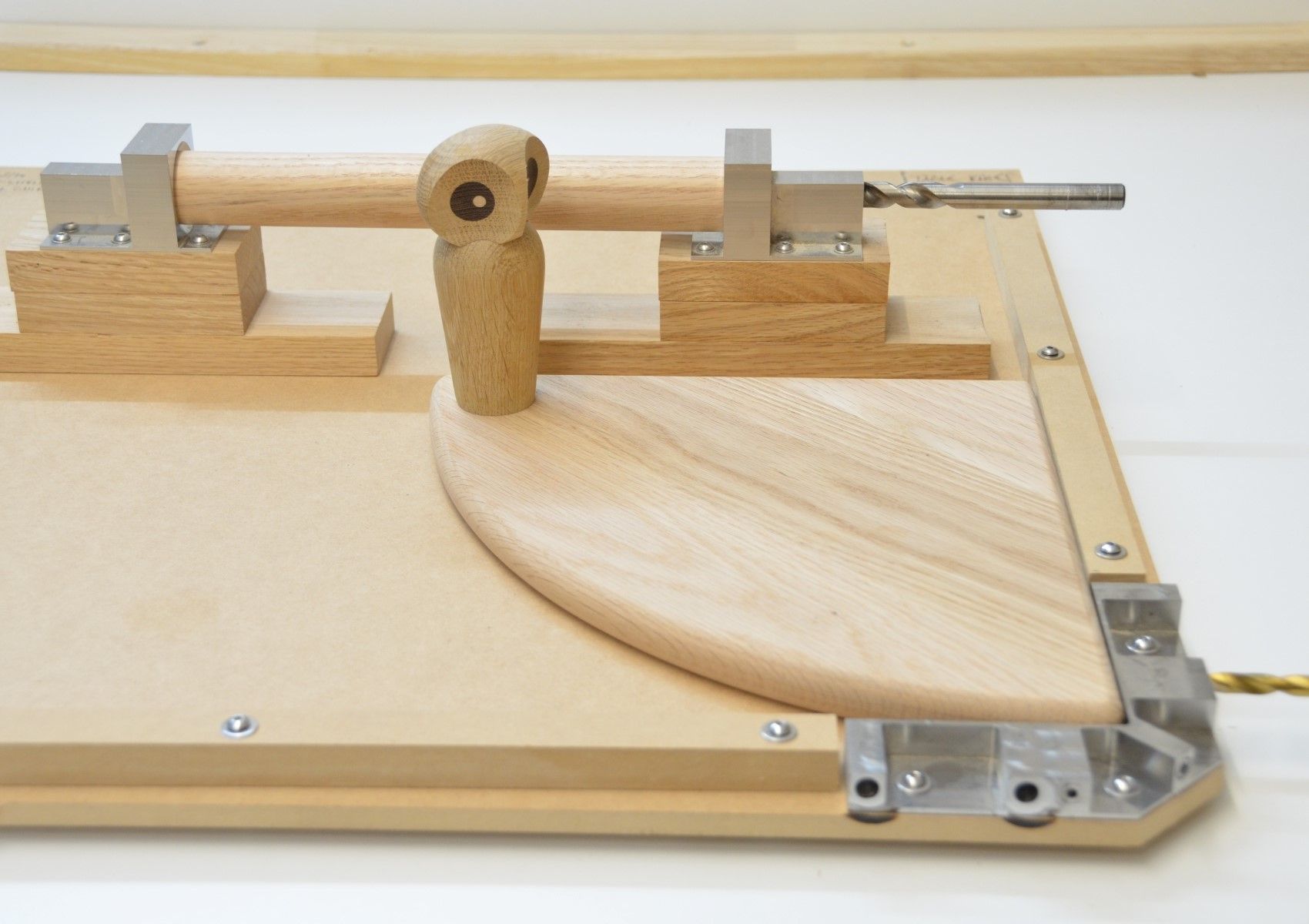
Key joinery points - such as the shelf connections and levelling-foot sockets - are drilled using precision-guided equipment. This process produces joints that are accurately centred and consistently aligned.
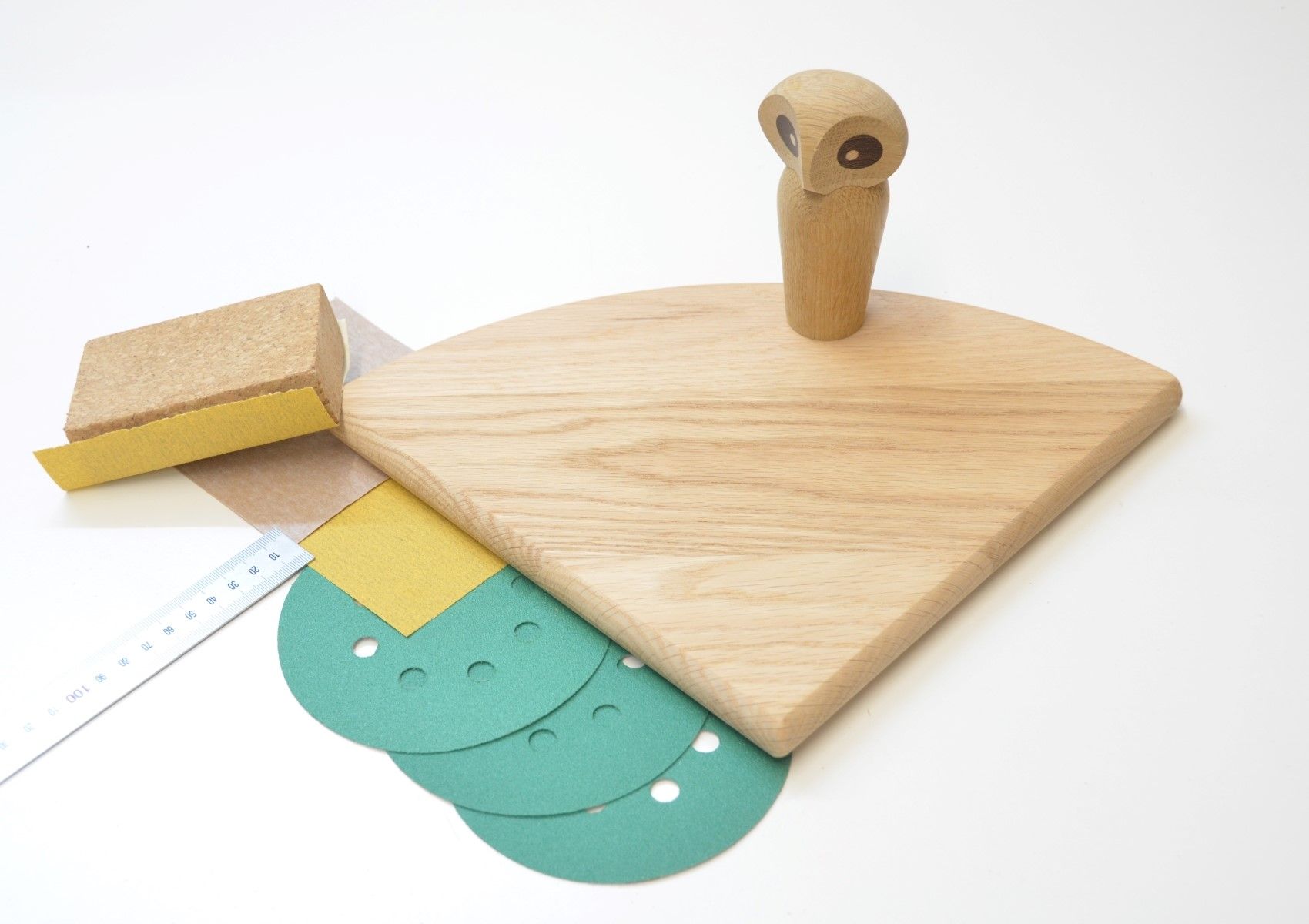
Sanding
The hardwood is prepared through a multi-stage sanding process using six grades of sandpaper and a wet-and-dry technique that refines the surface between passes. This careful preparation creates a smooth base for finishing.
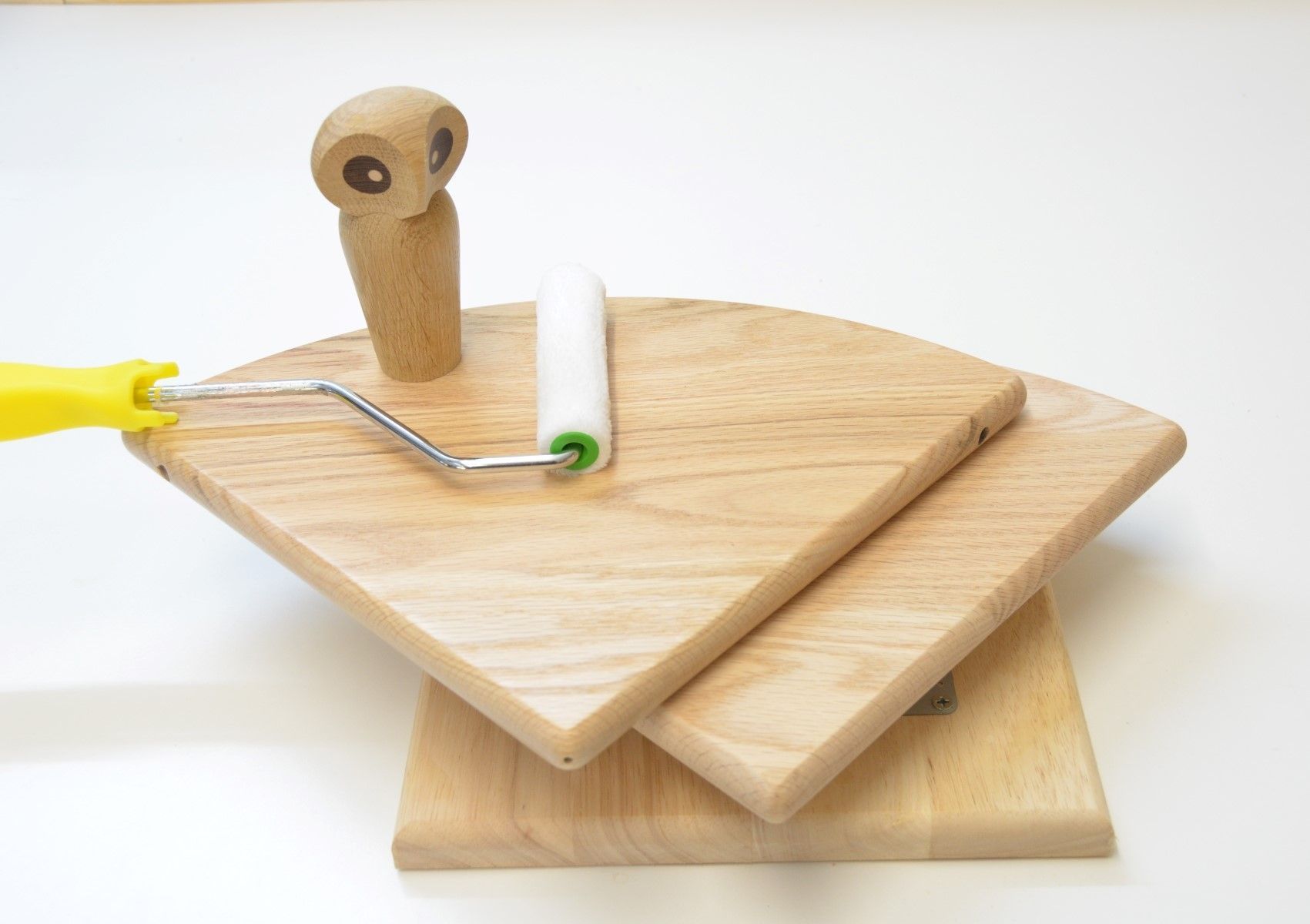
Finishing
A durable, wear-resistant finish is achieved using techniques and water-based lacquer systems similar to those used on high-traffic hardwood floors. The result is a smooth, hard-wearing surface that, when maintained according to our guidelines, is suited to long-term contact with pots, plants, soil, moisture and everyday handling.
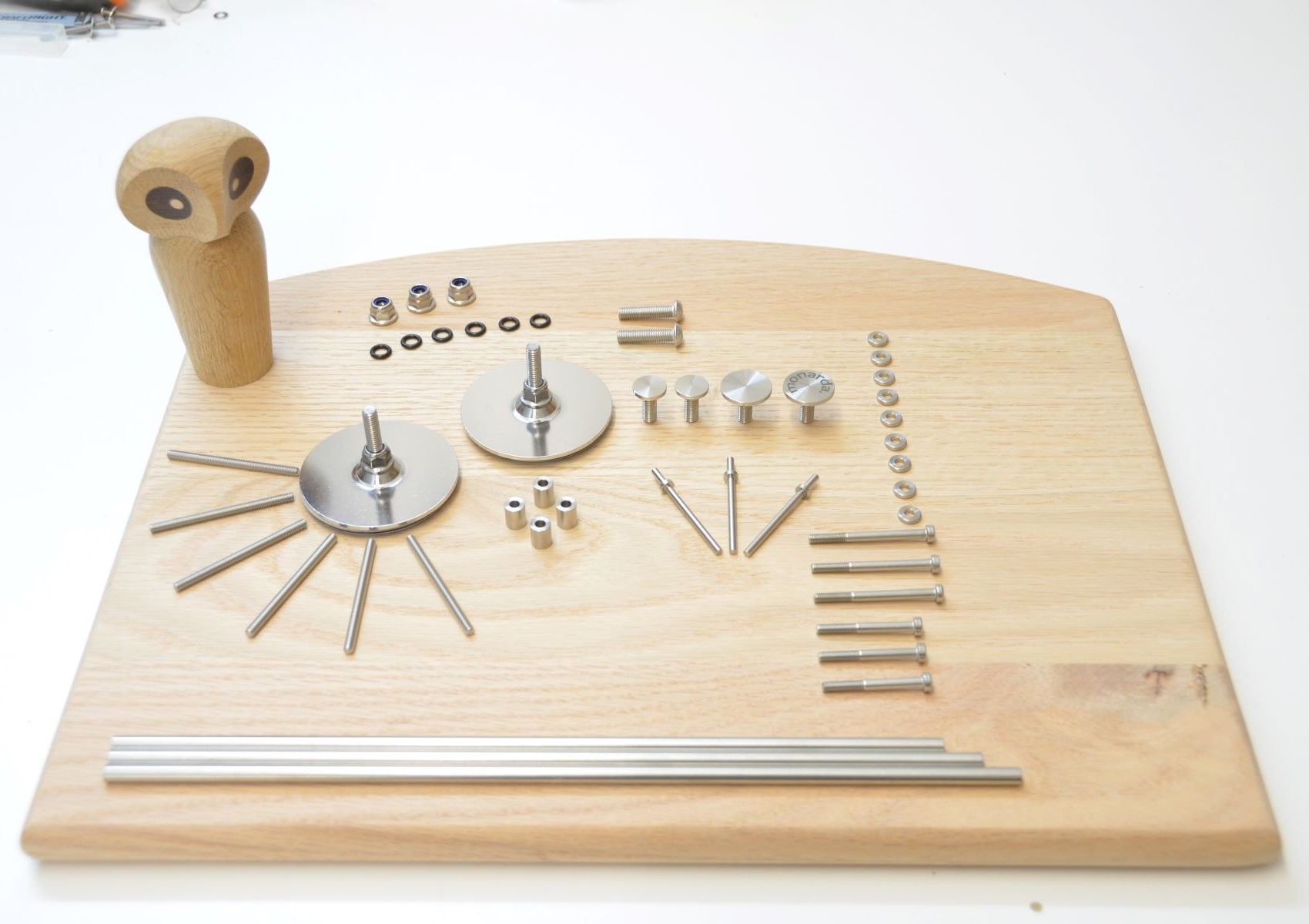
Joined by stainless steel
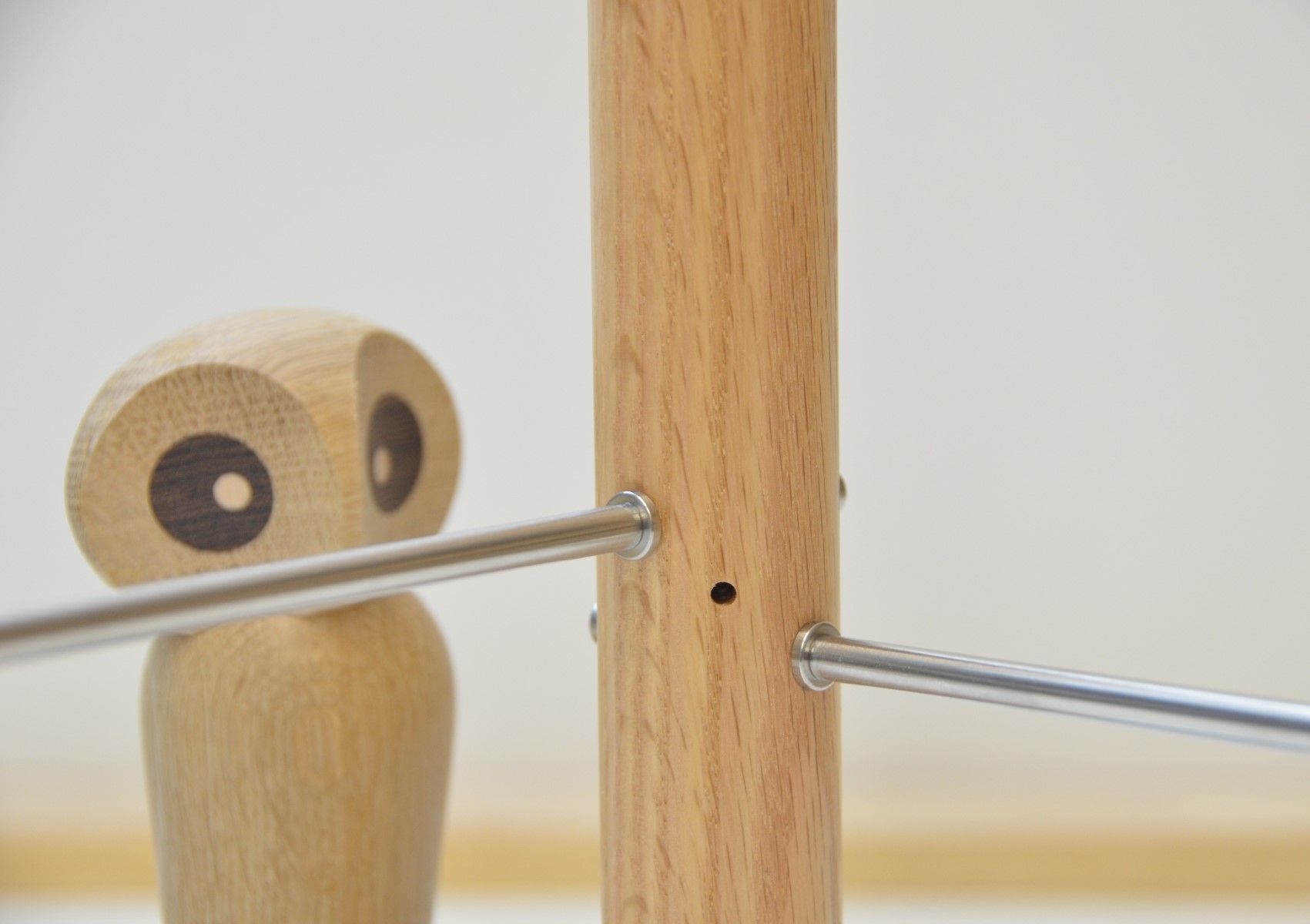
Stainless steel components form the core of the joinery system, fastening the hardwood legs and rails and securing every shelf position. Their precision, strength and rigidity supports the modular geometry while contributing to a distinct visual character.
Frame joinery
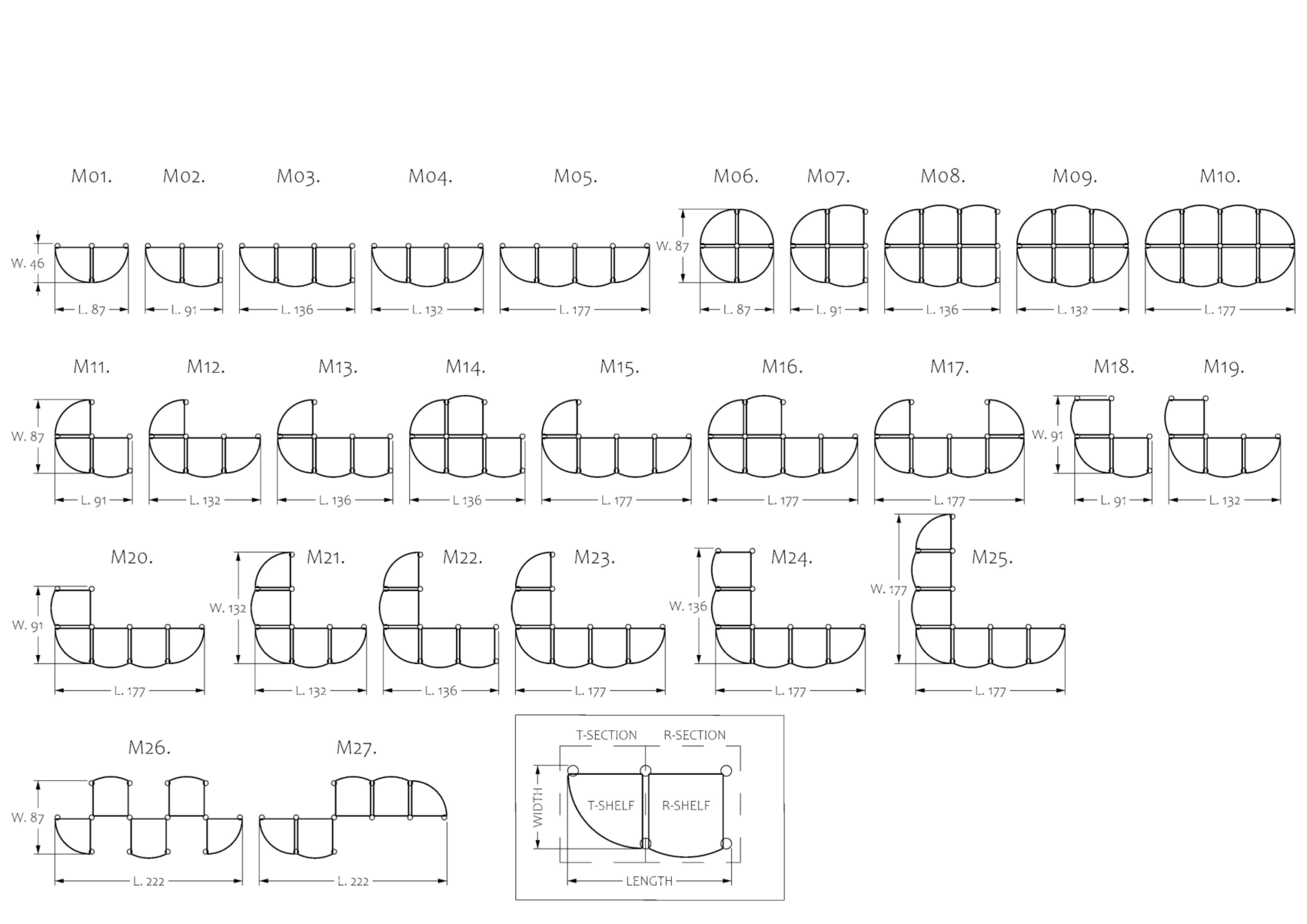
The hardwood rail - the backbone - is drilled with a mirrored pattern of precisely angled joining points in three layers. This allows modularity by adding straight and 90-degree triangular and rectangular sections, each section available with all shelf-joint positions as determined by the selected section height.
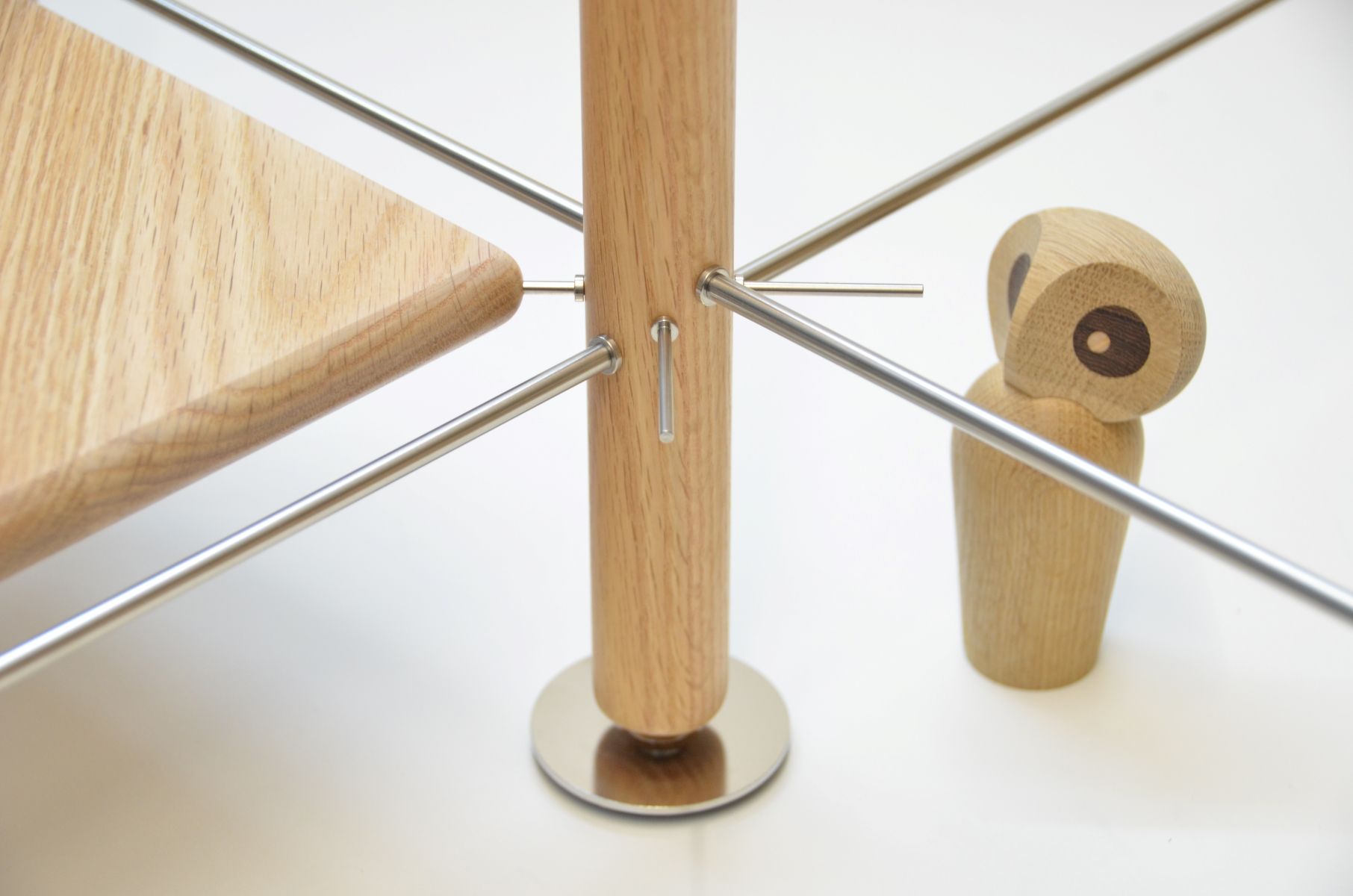
Shelf joinery
Stainless steel joinery secures each shelf to the section frame at the chosen height position, set according to the preferred vertical spacing between shelves. All section frames offer a full range of shelf-joint positions along their height.
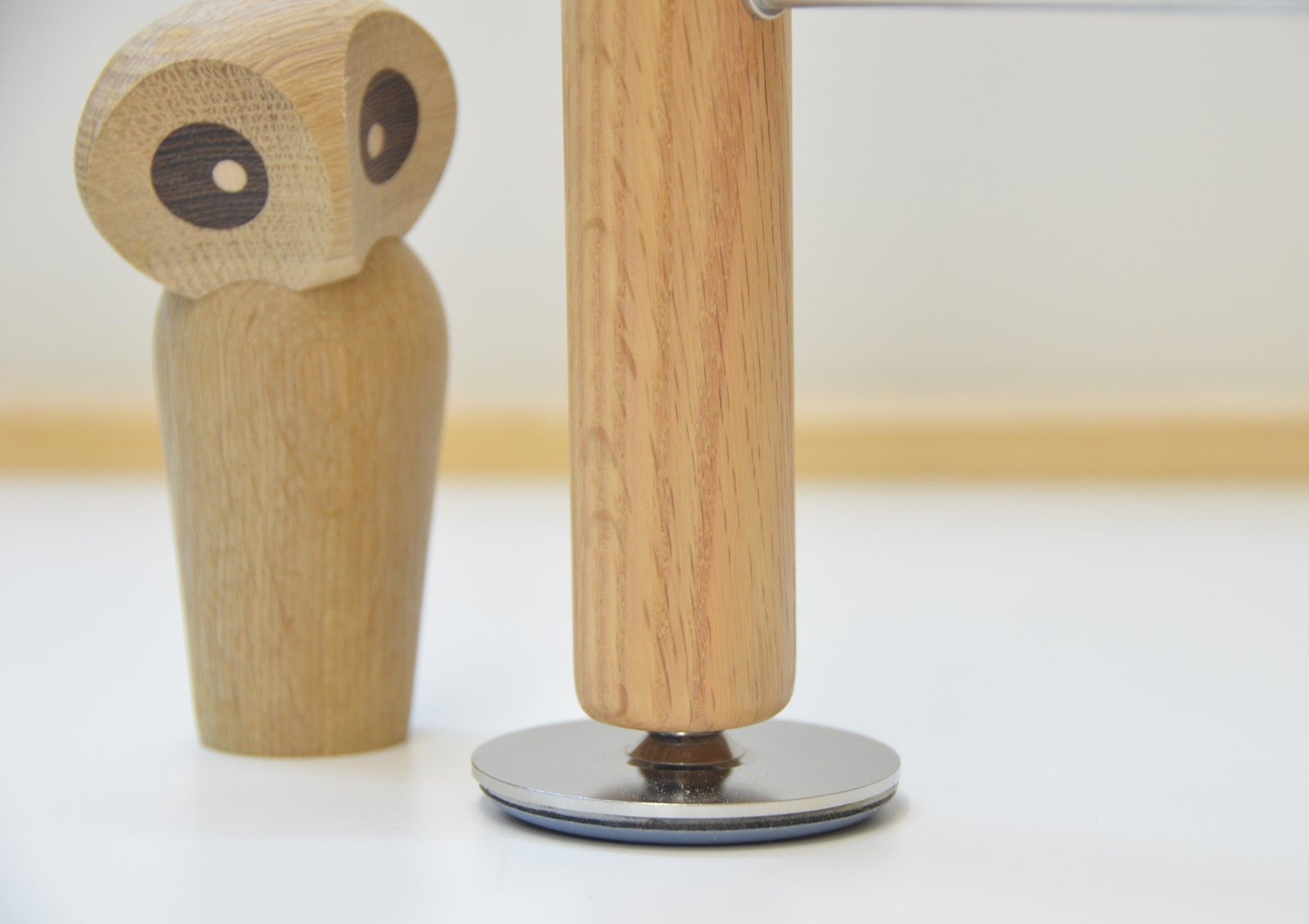
Foot joinery
Stainless steel levelling feet fasten to the section frame via embedded, hidden steel threads that provide precise height adjustment for accommodating uneven floors. Each foot also includes a built-in 15-degree tilt function.
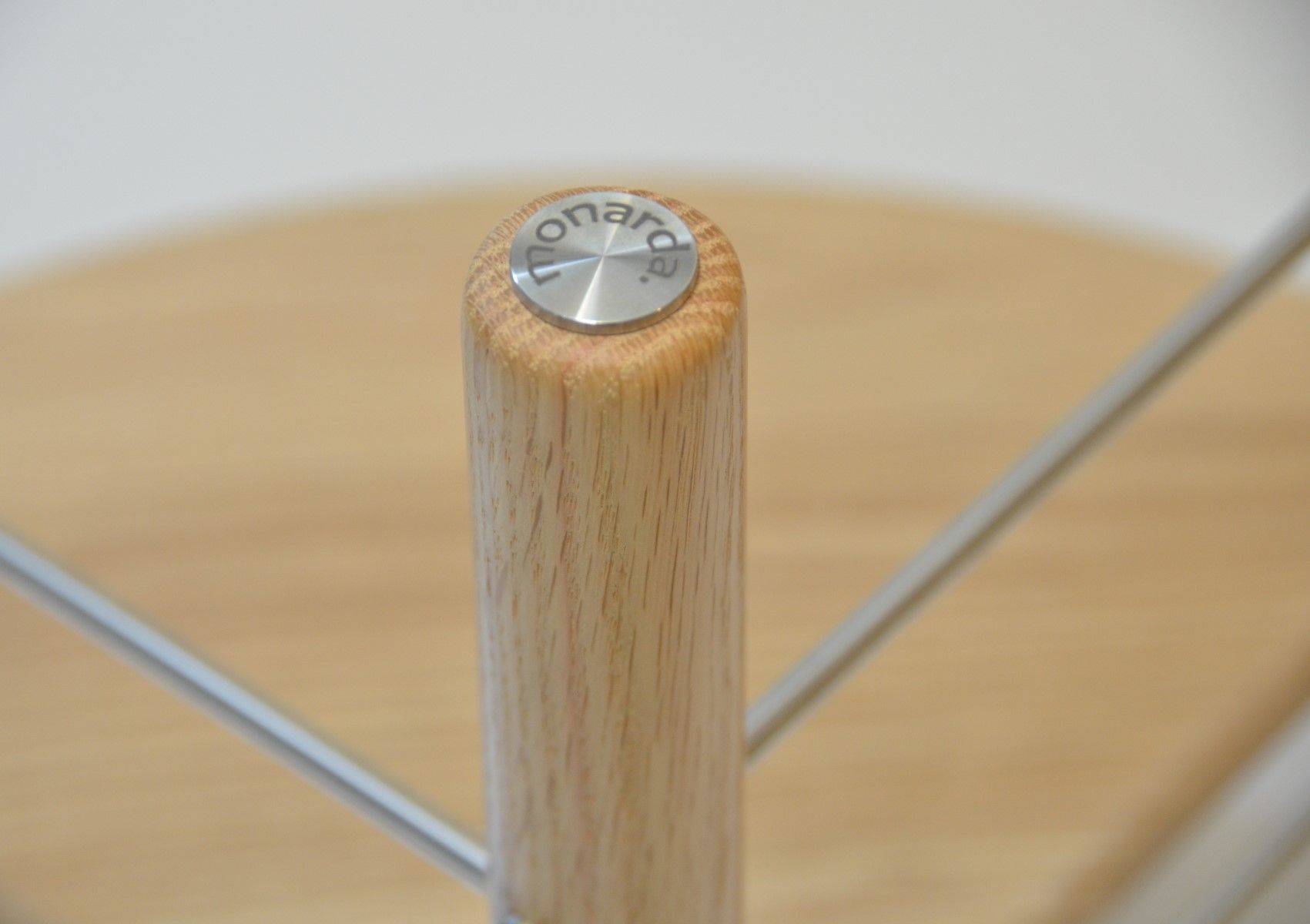
Top joinery
Rail and leg top joinery are drilled and dimensioned to match the foot joinery, and this shared joinery logic enables perpendicular, horizontal connectors to be positioned either above or below shelf positions.